To the Glory of God and in proud and grateful memory of those who went out from this village and gave their lives for their country in two World Wars.
Les Goodship was just a boy of twelve when he watched the young men of Wood Street muster on the Green in 1916. Before marching away they sent the boys to buy sweets from the grocer’s at the White Hart. Some were never seen again. It is perhaps significant that many joined the local regiment, The Queen’s Royal West Surrey Regiment, which had its headquarters at Stoughton. The burial-places of the casualties grimly portray the history of “The Queen’s” at war.
The Commonwealth War Graves Commission have been helpful in supplying details of most of Wood Street’s War Dead.
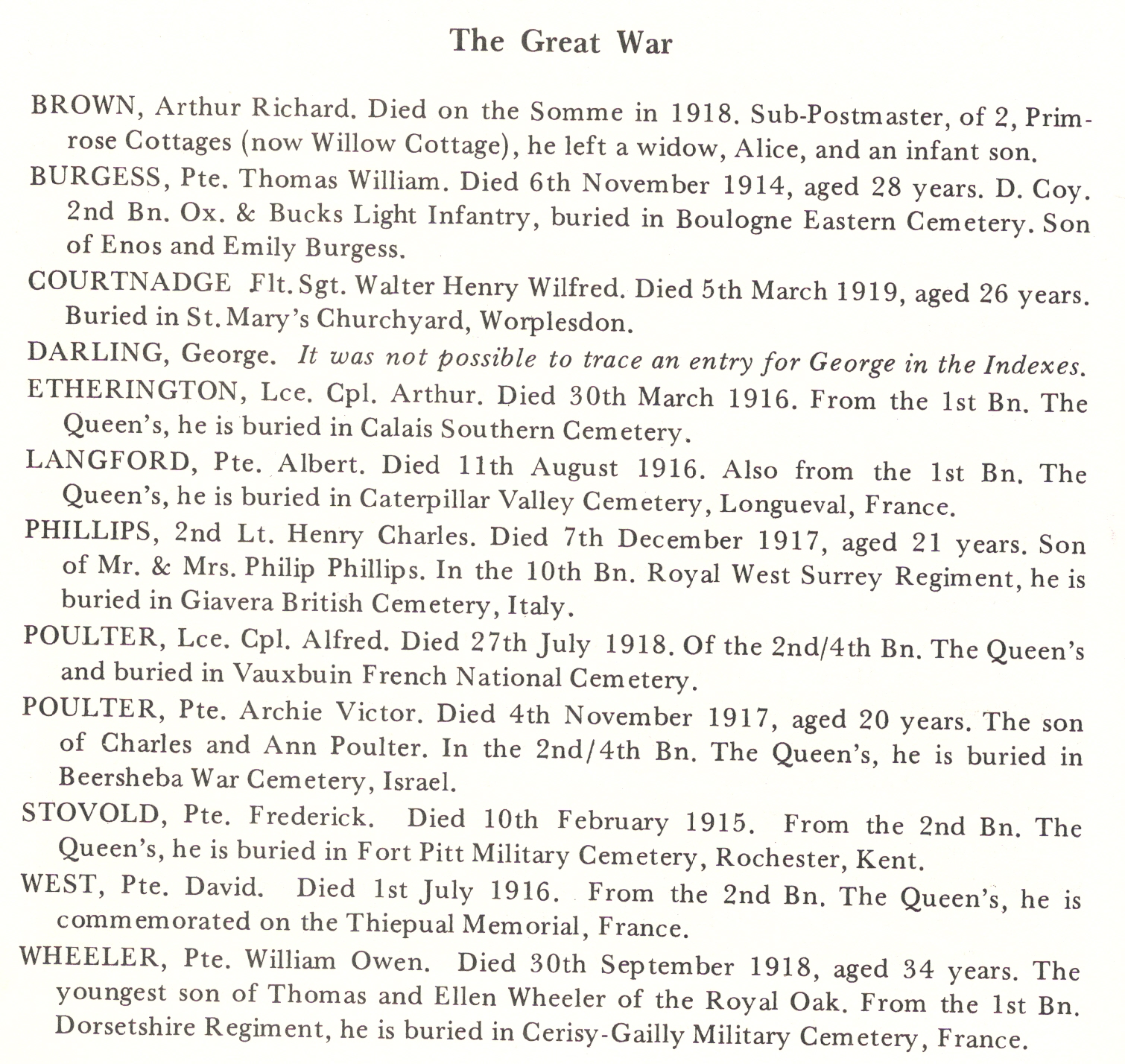
Wood Street Village War Dead in The Great War 1914 – 1918
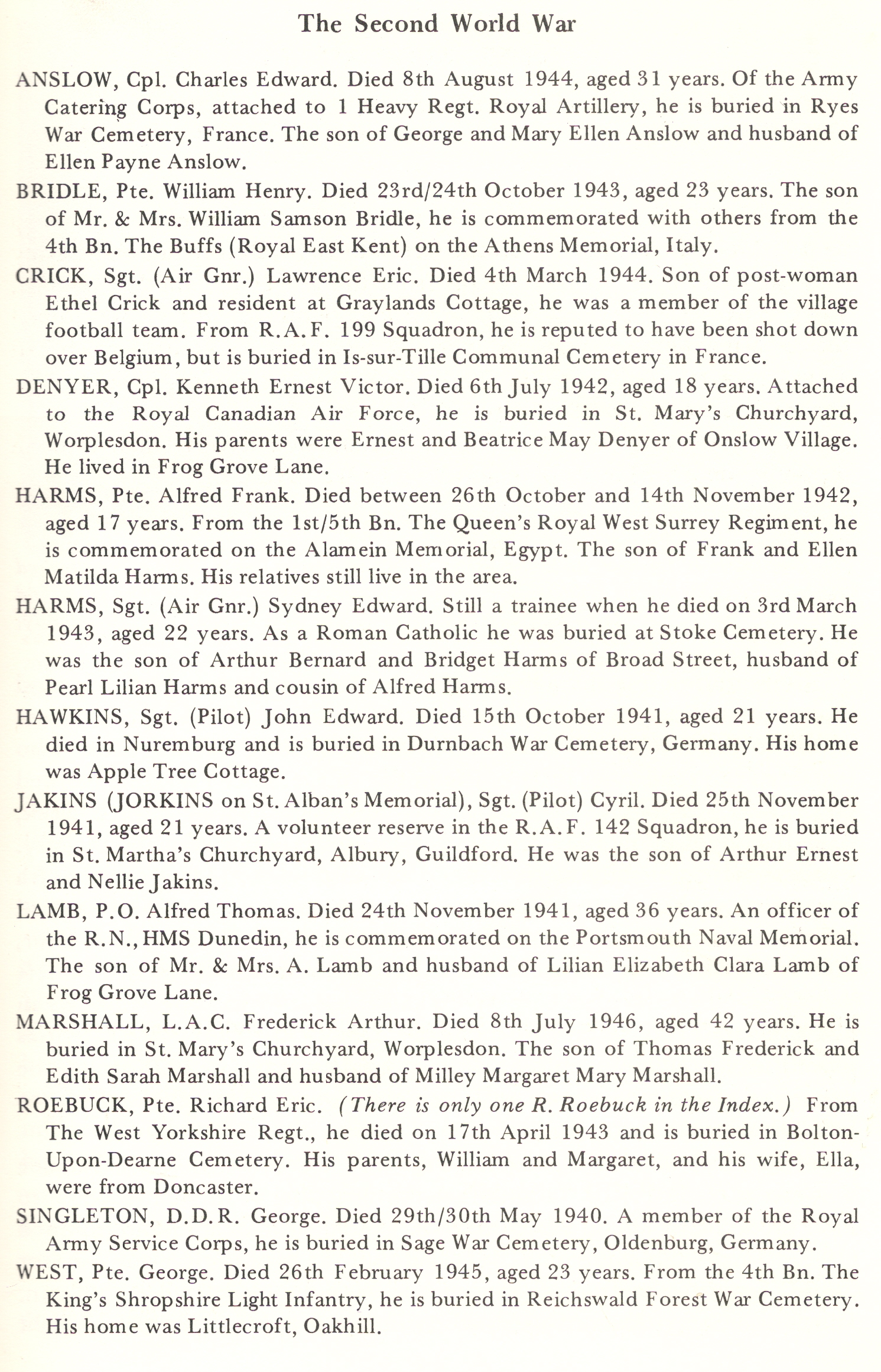
Wood Street Village War Dead from The Second World War
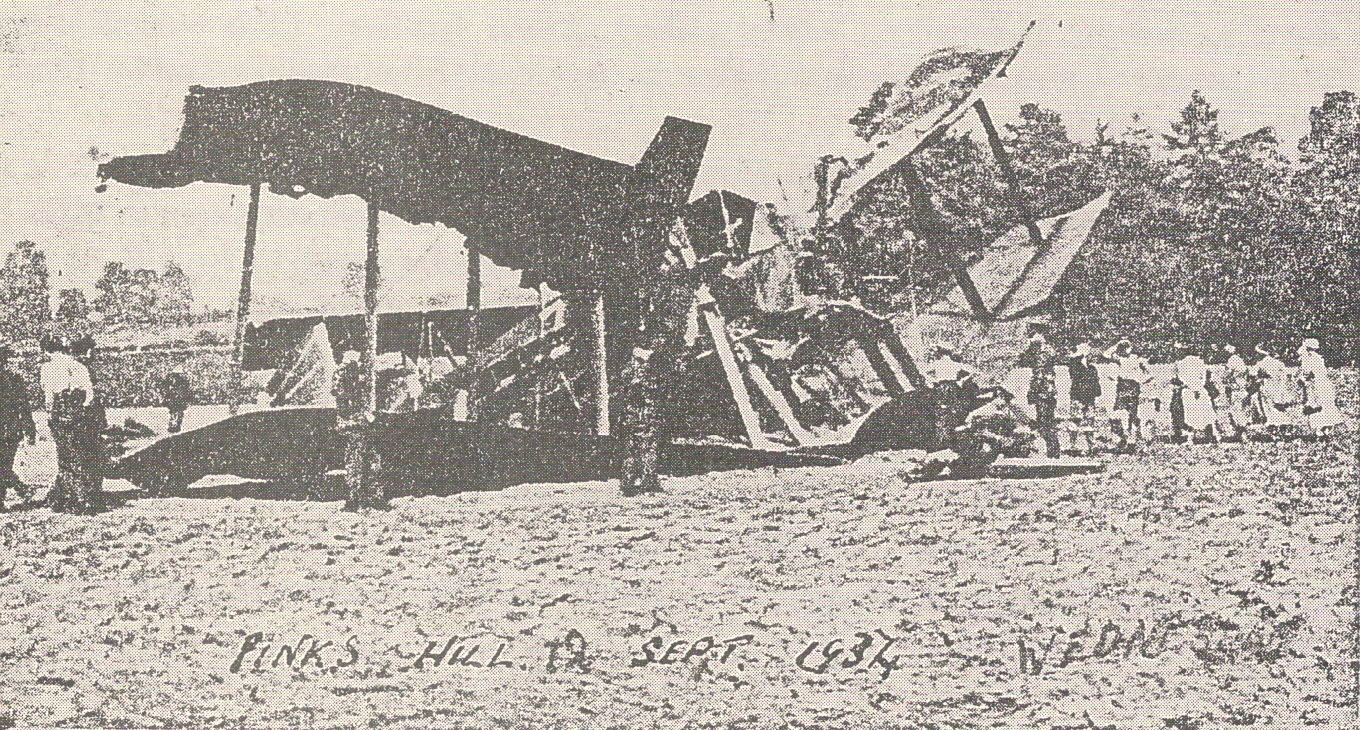
The preparations for war included night flying in search lights. This plane crashed into a field adjacent to Wildfields, narrowly misssing the signal box. The pilot and crew had parachuted to safety near Bailes Lane, Normandy. September 1934
Conscription left the village sadly short of manpower. In the Second War several Wood Street women became Land Army Girls. Evacuees added to the amount of work rather than depleting it. Even those who remained can remember little of life in the village, since everyone worked very hard. The twelve-hour day, day and night, seven days a week, operated at Drummonds, day and night shifts alternating fortnightly. Farmers were generally single-handed and also worked long hours. Extra land, such as Broad Street Common, had to be worked for wheat and potatoes. In addition there were initially the Land Defence and, later, the Home Guard duties to be done. At the outbreak of war those left behind were encouraged to prepare sand-bags and to tape windows in just the same way as townspeople did. One of the Borough’s activities was to survey all wells, to be able to provide water should the mains be destroyed. Gradually those with vehicles found themselves unable to purchase petrol.
Most local farmers were encouraged to volunteer as ‘Local Defence Volunteers’ (L.D.V.) to “counteract the dropping of foreign troops into rural areas”. One Wood Street man was issued with an armband (marked LDV), a forage cap and a pike! It is said that the pike came from Windsor Castle! Later this volunteer received a 12-bore double-barrelled shot-gun. The Wood Street Home Guard, when finally formed, consisted of eight or nine sections, and drew men from Fairlands, Liddington Hall, Rydes Hill, Broad Street and Wood Street.
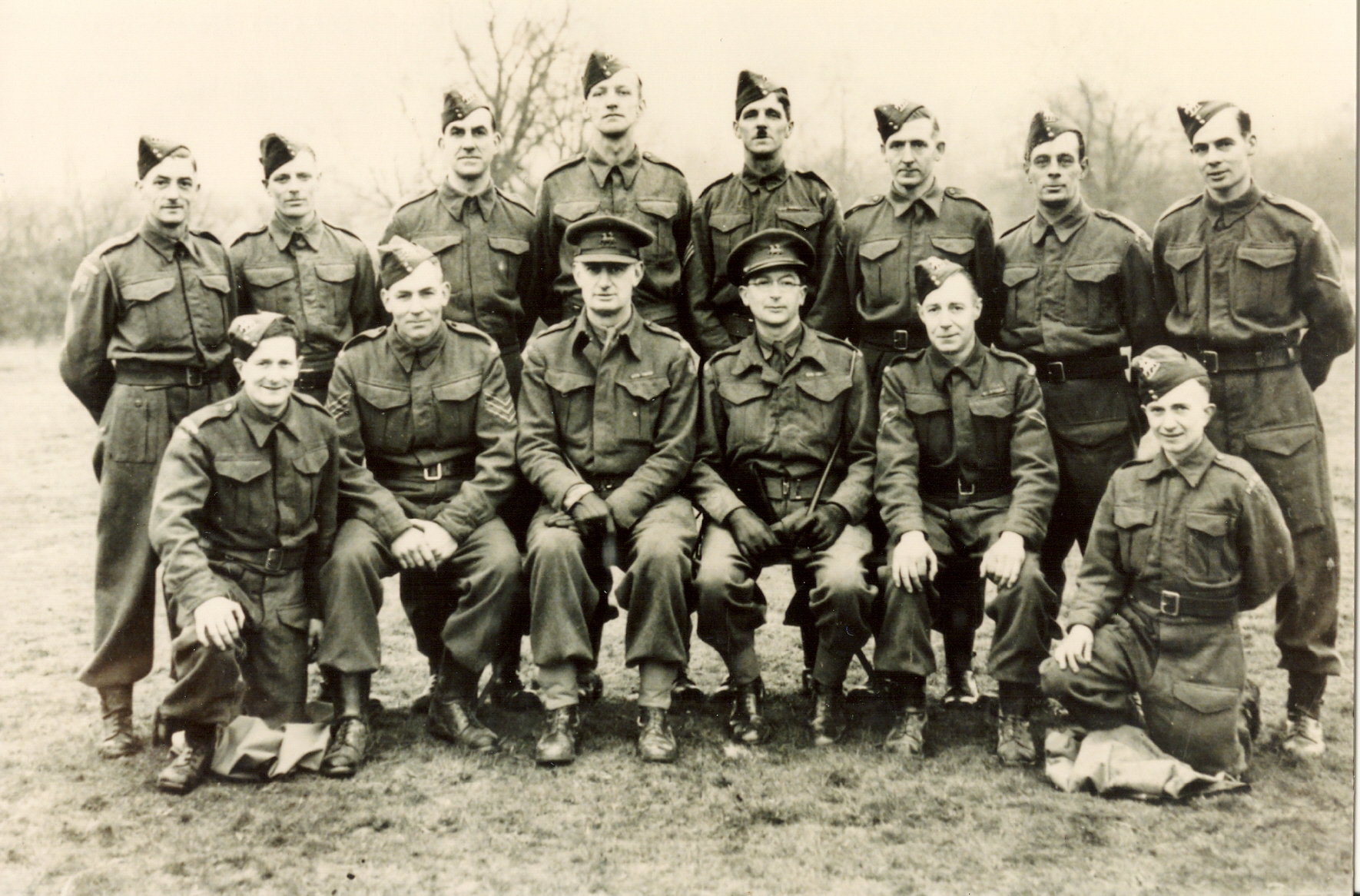
Wood Street Home Guard No 1 Section: Their task was to patrol from Rydes Hill Roundabout to Wood Street Green from 10 p.m. until dawn, for one night each week. The ARP ( Air Raid Precautions) Unit was responsible for the area from the Green to Clasford Bridge. Front Row, left to right: Frank Norkett, Fred Short, Lt. Col. Gordon Browne – Officer in Charge, Henry Grinstead, Reg Boylett, Tony Knowles. Back Row, left to right: Jim Hunt, Fred Wellbelove, unidentified, unidentified , Fred ‘Navvy’ Boxall -Platoon Sergeant, unidentified, Frank Denton, unidentified.
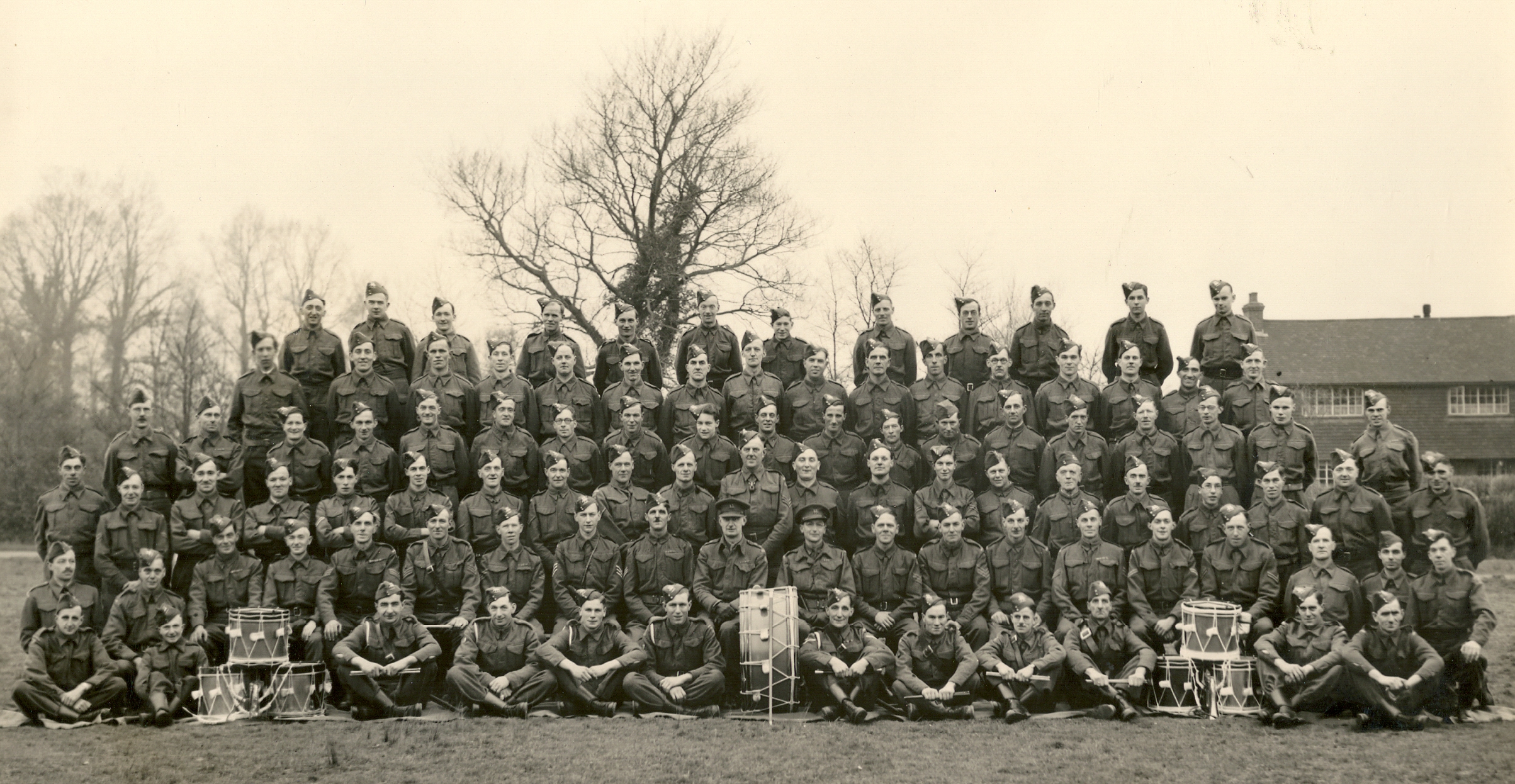
Wood Street Home Guard: – Composed mainly of men in Reserve Occupations, it was one of the few to have a full band. They trained at Henley Park Ranges on Sunday mornings, returning at noon. There is a story that as ‘opening time’ approached the band increased step from 80 paces to 120 paces to ensure the White Hart was reached in time for opening. Lt Col Gordon Browne of Nightingale Old Farm was the Officer in Charge, and men were drawn from as far as Rydes Hill.
They were mainly men in Reserve Occupations, employed principally at Drummonds. The Headquarters was established in a barn at Pound Farm, the home of Major Baird, who was a senior officer in the Home Guard. The officer in charge of Wood Street was Lt.-Colonel Gordon Browne of Nightingale Old Farm. The Platoon went on duty at 2200 hrs. and stood down at dawn. One of the tasks was to patrol from the Green to the Hare and Hounds public house; another was to act as guards for Cobbets Hill Wireless Station, patrolling with an Army Alsatian dog. There was also training on Sunday mornings. Farmers with livestock got dispensation from the training, but night-shift workers at Drummonds were not so lucky. Instructors were provided from the Guards at Pirbright. Rifle target practice at Bisley or Henley Ranges was followed by the march home, with band accompaniment, in time for the White Hart’s opening at noon.
The patrol from the Green to Clasford Bridge was performed by the A.R.P. (Air Raid Precautions) Unit. Their headquarters, or hut, was the former blacksmith’s home, now the site of the electricity sub-station, on the Green. It was also used as a First Aid Post. The head Warden was Mr. M. Morris of Frog Grove Lane, and its members included a Belgian gentleman and four ladies who acted as Red Cross Nurses. They used an empty house on Pinks Hill for evacuation and rescue practice.
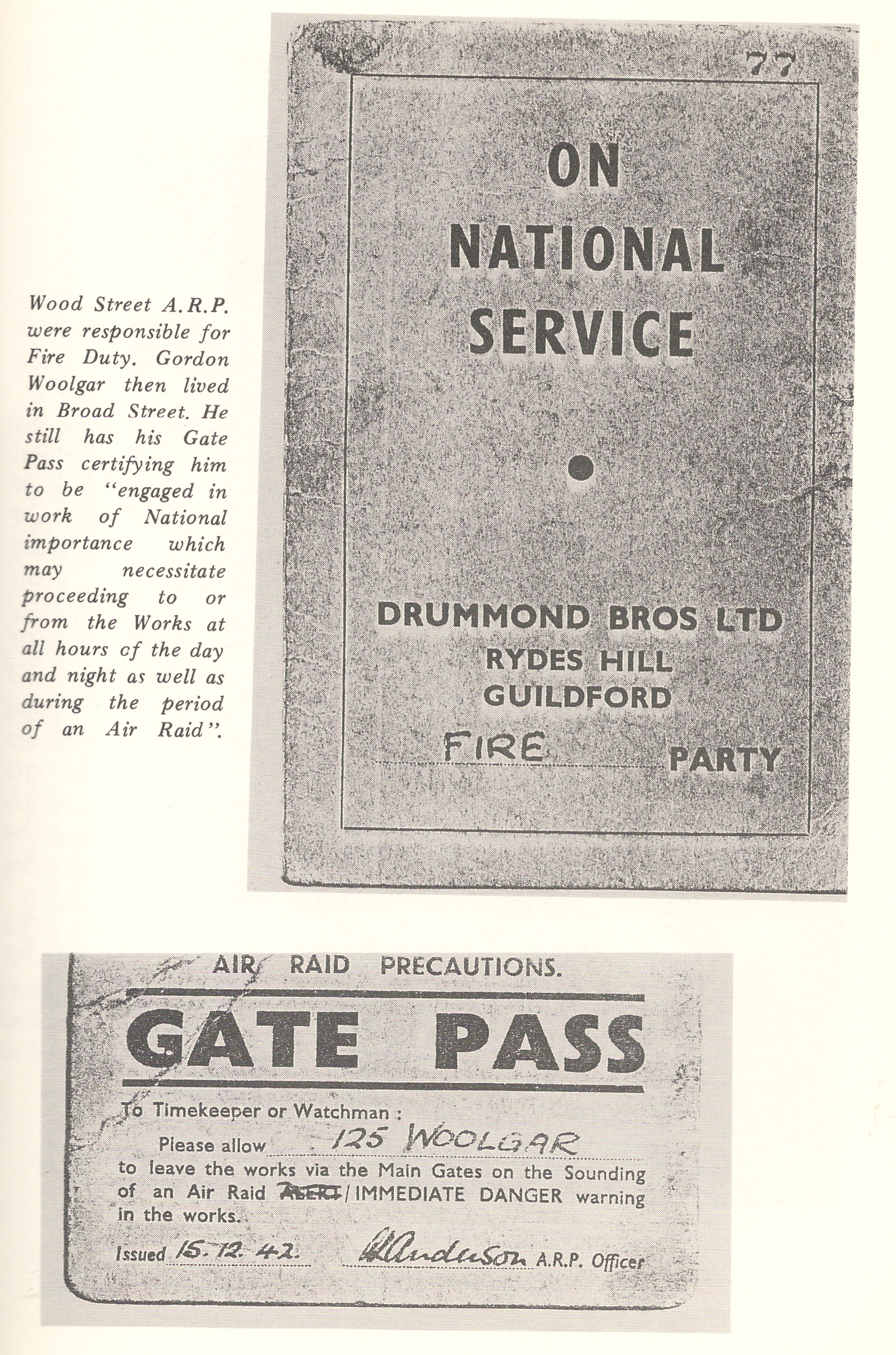
Gordon Woolgar – Wood Street Air Raid Precautions Unit
A Fifth Columnist was arrested at Beckdale House. Incendiary bombs and an oil bomb did some damage in Frog Grove Lane, mainly to animals; three very heavy bombs were dropped at Blackwell Farm. Inholms Barn was designated a mortuary. Happily it was only needed on one occasion, when a German plane was brought down at Clasford: two of the occupants were taken to the Royal Surrey County Hospital (now Farnham Road) and two were laid in the barn.
Various collections were made. Many remember scouring around for aluminium jugs, kettles and saucepans for recycling to the aircraft industry. Other theme weeks in which the village took part were War Weapons Week, Warship Week, Wings for Victory and National Savings Week. Red Cross Nurse, Grace Manuel, assisted Sister Willie of the Royal Surrey County Hospital in judging the Baby Show. On another occasion there was a special Church Parade to raise money for anaesthetic tables and a lamp for the Operating Theatre at the Royal Surrey County Hospital. It started from Drummonds and the salute was taken by a General outside the church; there followed a service on the Green. The parade is said to have included an Army Band (was it perhaps our own excellent Home Guard Band?); the Home Guard; Wardens; Red Cross; Drummonds Fire Brigade; the A.R.P. Services of Drummonds; and the A.F.S. Our informant cannot remember if the Member of Parliament was present on this occasion or not: his pep talks were a feature of such gatherings.
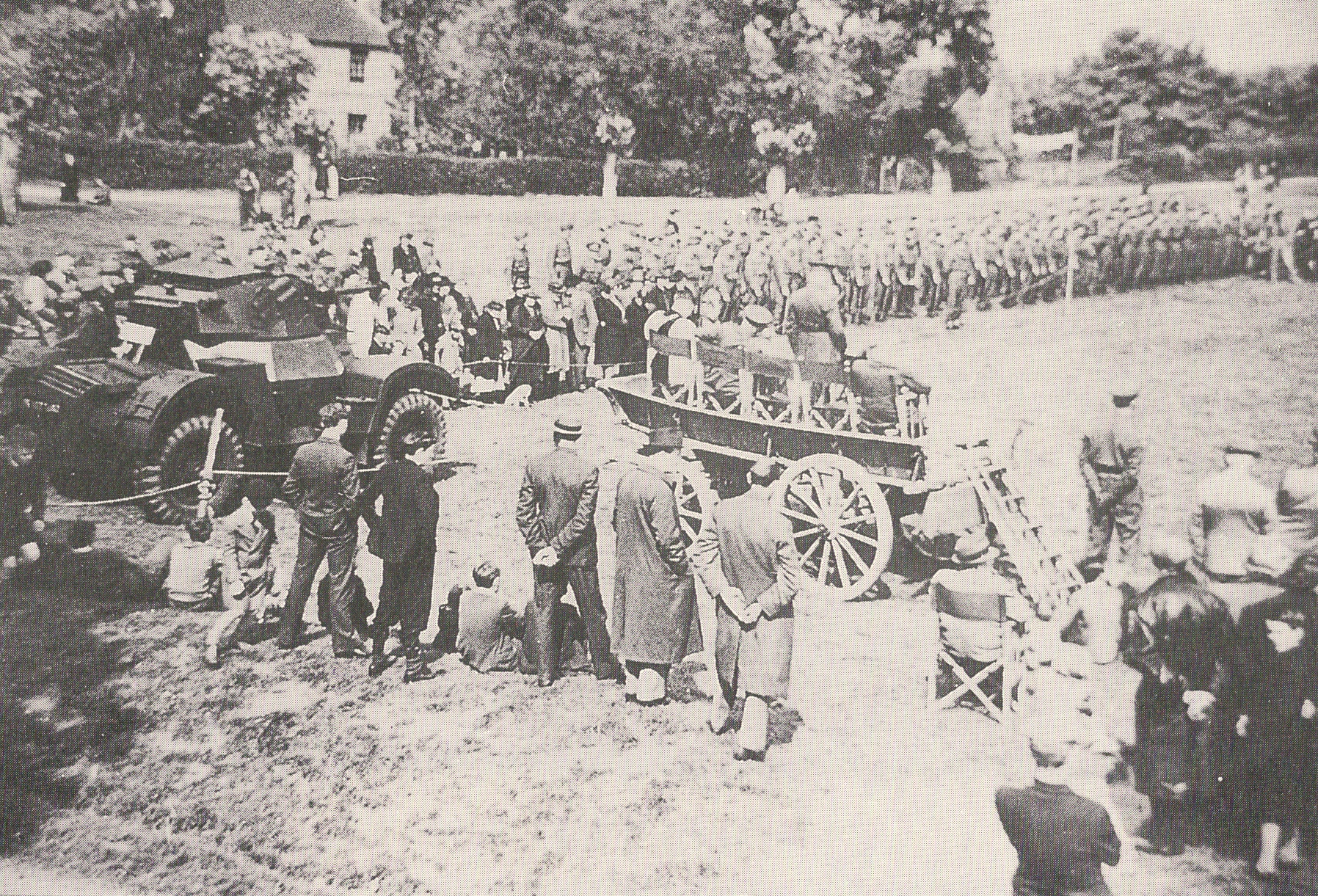
One wartime activity was a special parade to raise money for ‘anaesthetic tables and a lamp’ for the operating theatre at the Royal Surrey Hospital ( now Farnham Road Hospital ). The Salute was taken outside the Church and a service was held on the Village Green.
The area continued to be used for training pilots in low flying. In 1943 Pinks Hill saw its second air crash (see picture on page 74 for the first crash), when two U.S.A.F. fighters collided in fog. One made a crater the size of a double-decker bus. Virtually only the engine remained and it is said that the U.S.A.F. paid to have the road made up in order to be able to remove the wreckage.