. . . apprentices at Drummonds were paid ten shillings and sixpence per week, including two shillings and sixpence which was deductible for bad behaviour, lateness’ etc.? This was in 1936: after four years of the apprenticeship, the pay rose to twenty-one shillings.
. . . part of Frog Grove Lane was not included when mains water was brought to Wood Street in 1915? The first bungalow (No. 8) was named Waterslade, and was built using water obtained from the ditch which ran alongside the road. Their first drinking water came via a hose-pipe from the cottage opposite: the lady of the house would put the kettle under the tap and go and make the bed while it filled! In 1926, when Bill Austin and Albert Chitty came to build their homes (Nos. 16 & 14), they had to wait for rain before they could mix the cement!
. . . gas was available, long before electricity? The Gas Company installed the pipe-work and lamps free of charge. (Electricity was not connected until 1936).
. . . cows chewed the cud on the Green?
. . . strawberries grew on the railway banks?
. . . the telephone posts along Broad Street carried the electricity wires? When these were put underground, the Post Office utilised the free poles!
. . . Miss ‘G’ Thorpe celebrated her hundredth birthday? This was 11th February, 1986; she had spent a mere forty-six years in the village. She taught herself to type in her centenary year so that her many friends might read her letters more easily.
Wood Street’s most long-standing resident is Mrs. Page-Smith (née Pierce). She has lived beside the Green since 1906.
. . . nightingales returned to sing, in 1982?
. . . children learnt to swim in the pond on Pink’s Hill? This pond is fed by an underground spring and has never been known to run dry. When it was cleaned out by Surrey County Council in 1983, the Thames Water Authority removed a large number of fish.
. . . many people were hard up? Mr. Goddard, who was headmaster of the school from 1932 to 1950, received the following letter one day from a parent:–
Dear Mr. Goddard
I am writing to say,
May the children have lunches on ‘Tick’ for today?
I’ll pay you tomorrow; I promise I will
You won’t have to send in a blue pencil bill.
Michael will bring up the cash for the week.
He’ll hand it over so mild and meek.
No doubt you are bored reading nonsense, I know.
And for the present I’ll say “Cheerio”.
. . . a family from Wood Street, having burnt even their floorboards for warmth, were forced to travel by cart to the Poor House? This was in the 1920s. (The Poor House is now St. Luke’s Hospital, Guildford.)
. . . Countess Mercia de Belleroche of Hook Farm, Broad Street, kept a tame fox? It was reputed to sleep on her bed!
. . . Vi Thorpe pumped the church organ? She was presented with the handle in 1954, when Raymond Crosby-Cooke, the well-known commercial artist, gave an electric organ in memory of his mother.
. . . the metal-work of the Coronation Flagpole and Village Sign were made by Toby Page-Smith? He was ably assisted by several anonymous villagers.
. . . the Australian Cricket Team played a demonstration match on the Green? This was on Sunday 19th July 1964. Their captain, Bobby Simpson, had opened the Flower Show the previous day. Marilyn Frost was crowned Village Flower Queen and had tea with the Australian captain, Bobby Simpson and fast bowler, Neil Hawke. Australian flowers had been flown in specially for her bouquet. ( edited 15/04/2016 )
… Coronation Day June 1953 – Coronation Programme for the Village of Wood Street in the County of Surrey
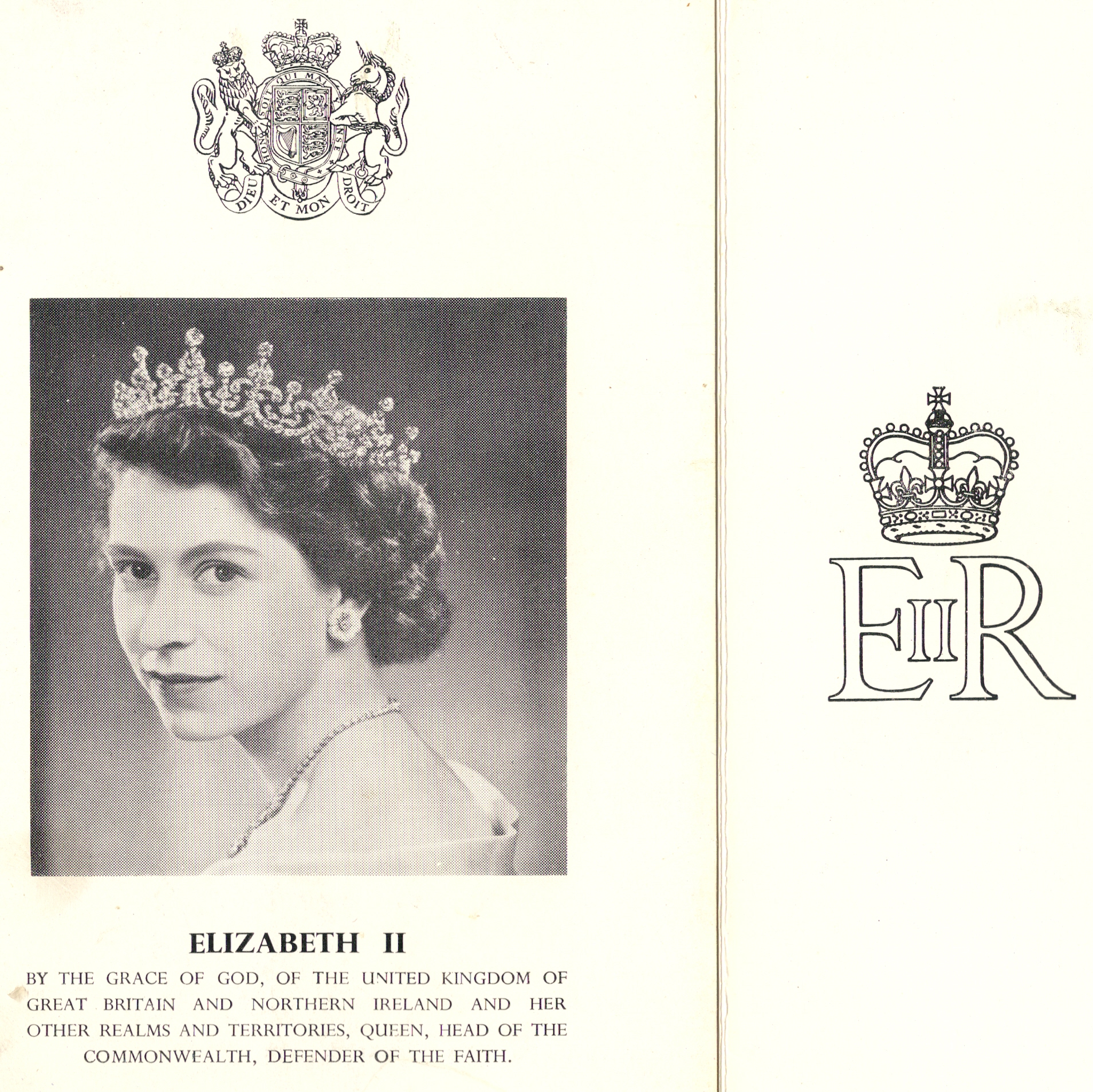
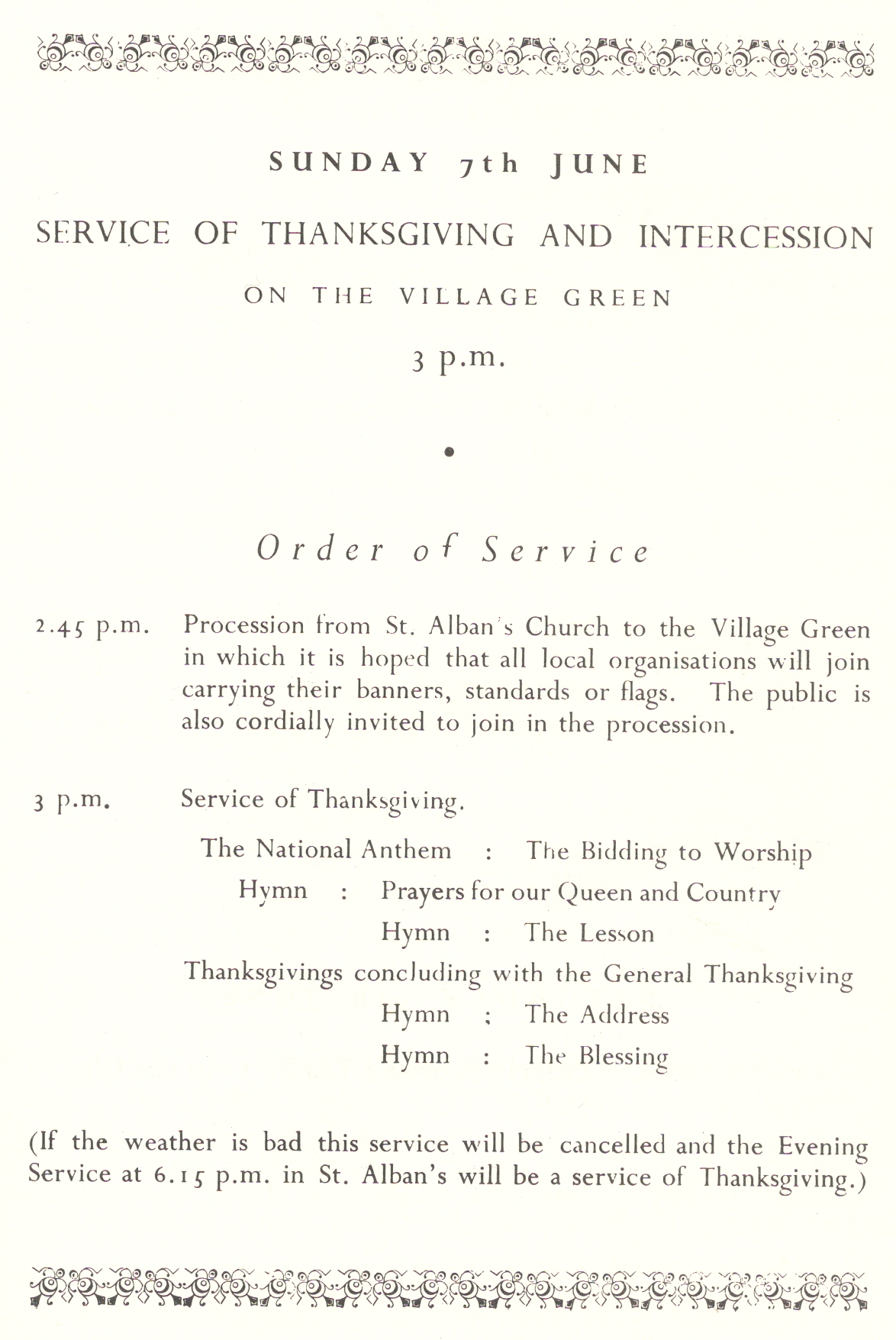
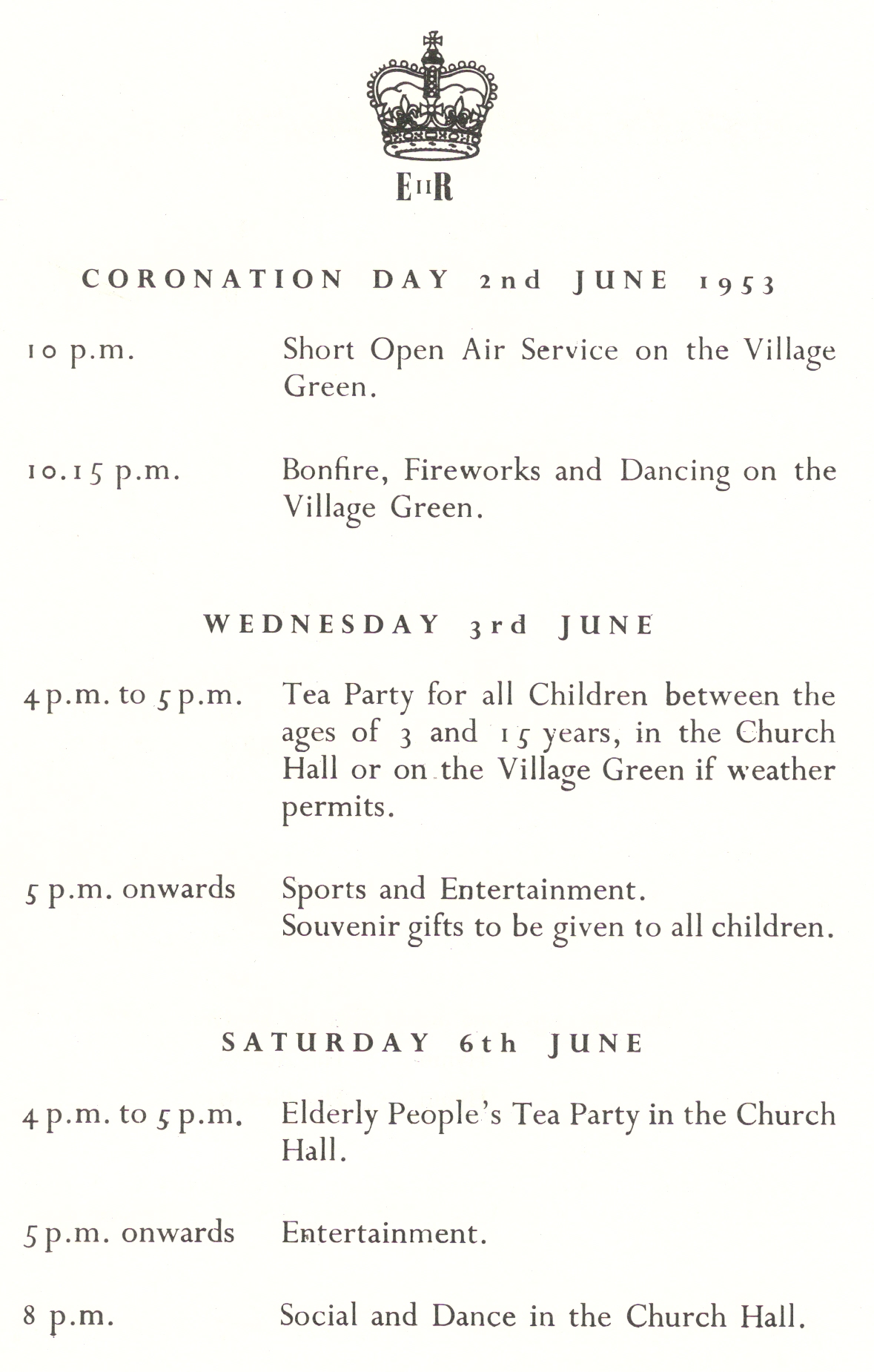
…Coronation Gala Day Programme

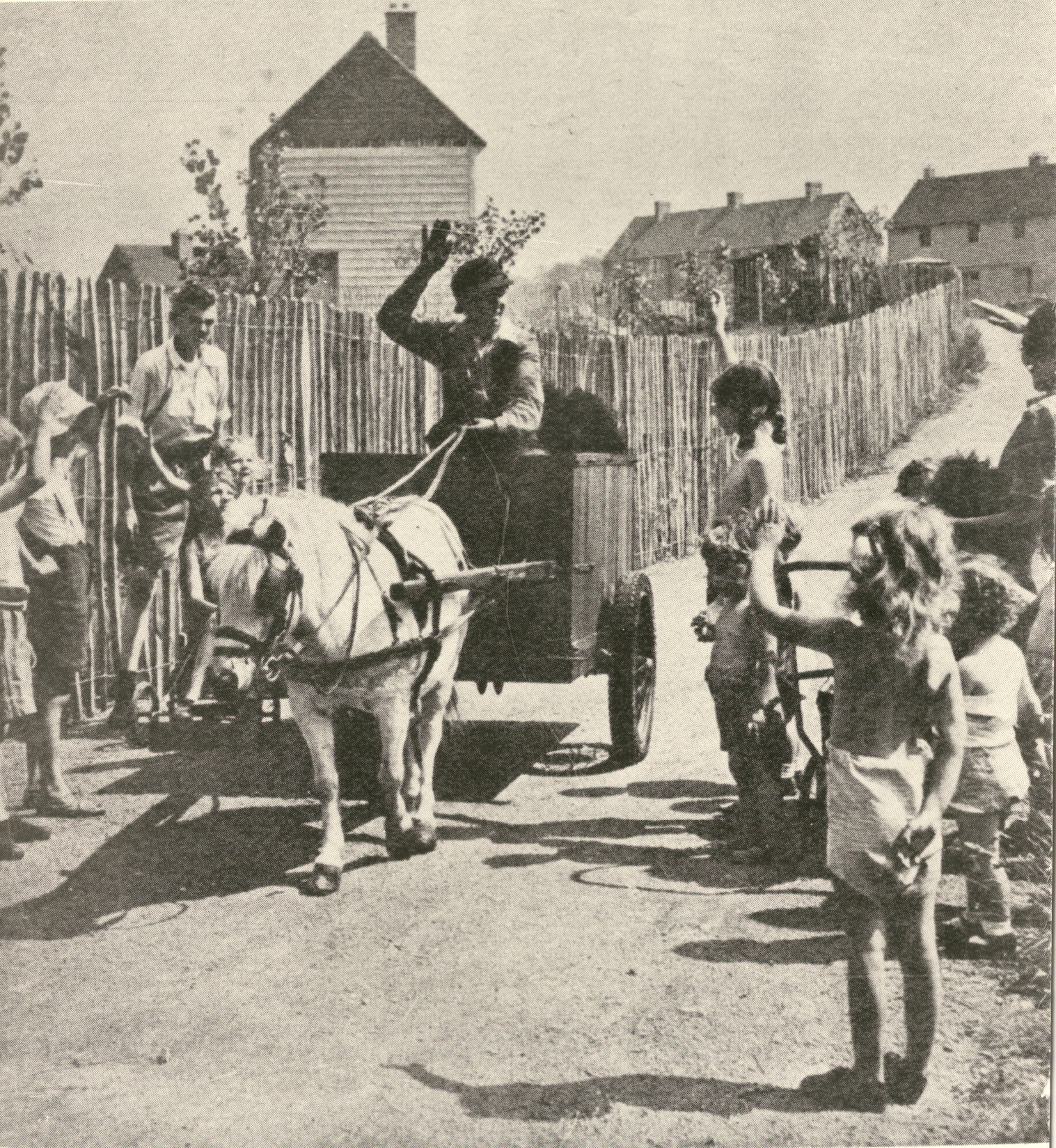
One of Wood Street’s 20th century characters was Mr Olive Walker. In 1950 she was unchallenged in her claim to be Britain’s only female chimney sweep, using her little cart to travel from house to house. (Pony called ‘Silver’)

Seasonal work for villagers was Hop Picking. Left to Right: Unidentified, Ester Stacey, Alice Matthews nee Stacey, with Olive Walker on the far right.
- Post a comment
0