Farms
Farms in Wood Street Village
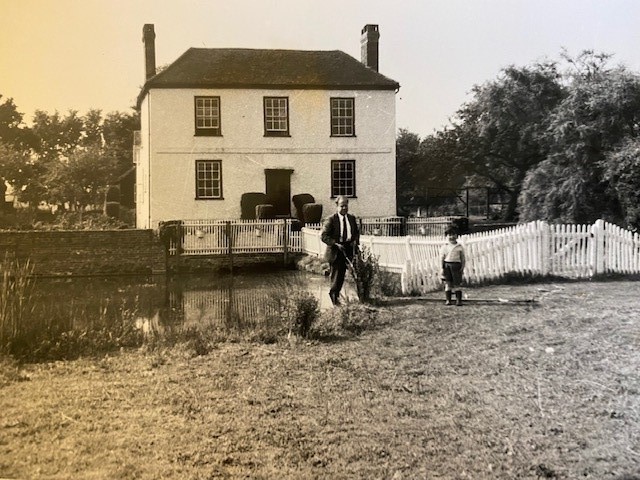
Billhurst Farm 1967, Douglas & Nick Law
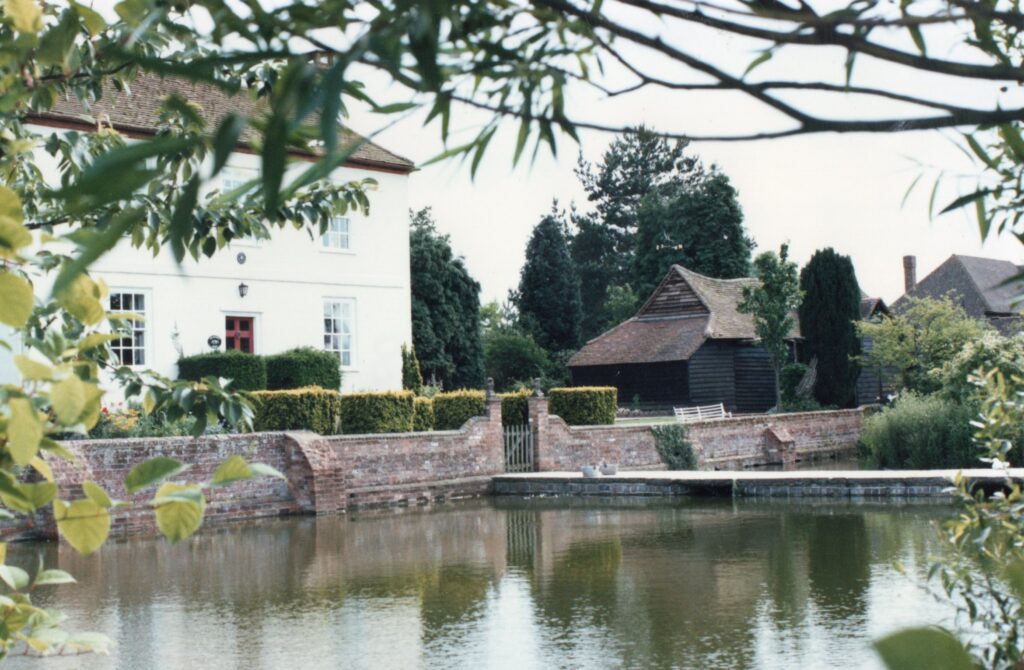
Billhurst Farm 1990 A symmetrical double pile, two storey listed brick house built in the early 18th century with 2 internal chimneys.
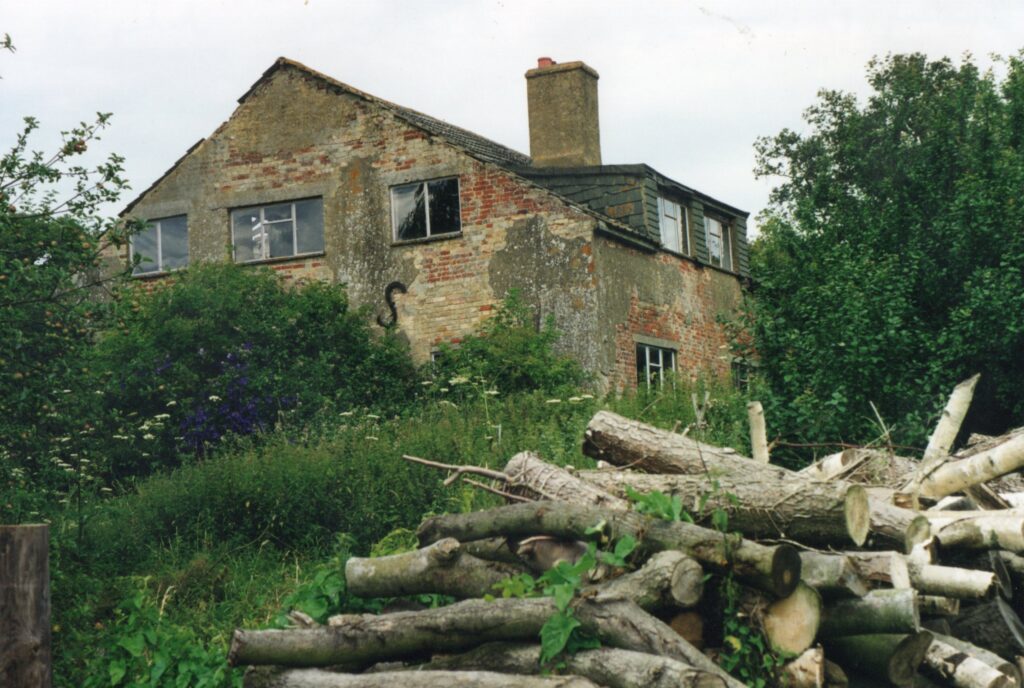
Bushy Farm. 1998 Backside Common. Demolished and Rebuilt around early 2000
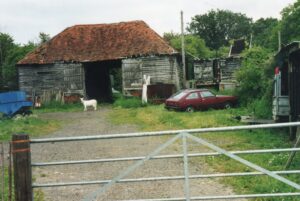
Bushy Farm Barn 1998. Demolished
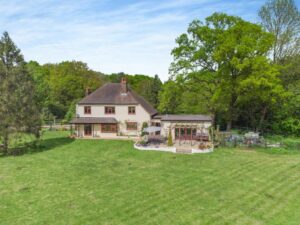
Chapel House Farm Rebuilt. The original building was demolished in 1921. Refer to ‘The Village Book’ for information about the belief that it was once a Quaker Meeting House. ‘click here’
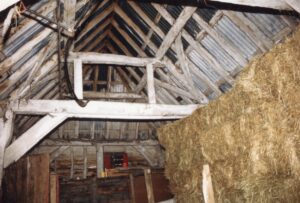
Chapel House Farm Barn c1580 – example of a Queen 2 Strut timber roof support.
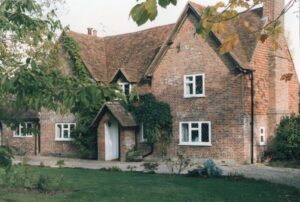
Comptons Farmhouse 1990. A 2 Bay listed mediaeval house built c1500. One bay hall is open to roof. A 17th C parlour wing added on the SW end with an outside chimney stack. In the 19th C the front of the house was faced in brick. A porch and dormer were added. Listed.
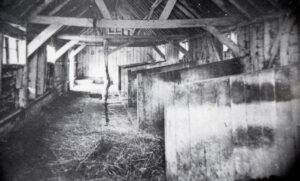
Comptons Barn pre 1938. The 16th C. barn at Compton’s Farm were converted into residences in 1938.
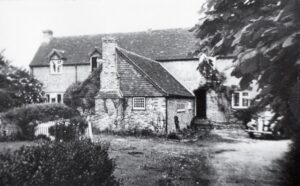
Comptons Barn converted into two residences post 1938
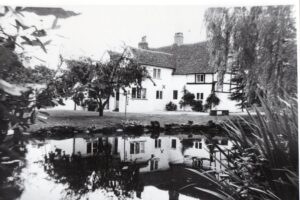
Dunmore Farm. Possibly early 15th C. Originally two bays with one open hall. The roof being a crown post timber construction with the area of the open hall being heavily sooted. A chimney being added in the 17th C.. Listed
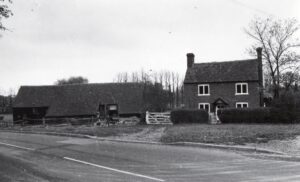
Hillplace Farm & Barn 1990. 17th C. – The farm may originate from Norman ownership. One of 16 listed buildings in Wood Street. The magnificent old barn burnt down in 1981.
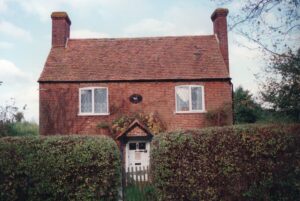
Hillplace Farmhouse 1990
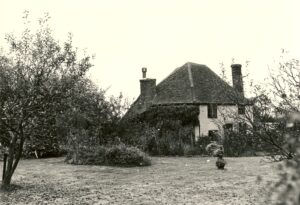
Hollybush Farmhouse Pinks Hill, 15th C. The brick façade of a Georgian 2 room cottage hides a mediaeval open hall house with a fine crown post roof typical of the 15th Century. The Loveland Family lived and farmed Hollybush Farm for at least 300 years. 13th C. pottery has been found in the garden.
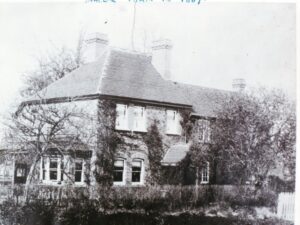
Inholmes Farmhouse 1887. A Georgian cottage dating from 19th C. With internal chimney and outshot extended in 19th & 20th C..
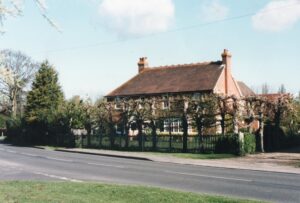
Inholmes Farmhouse 1999.
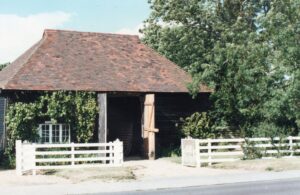
Inholmes Barn 1990. The oldest barn in the parish. Early 15th Century barn with long passing wall braces, Only the second one recorded by Surrey Building Research Group north of the North Downs.
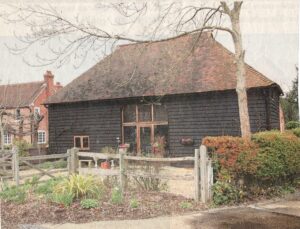
Inholmes Barn 2008. Converted into a Residence
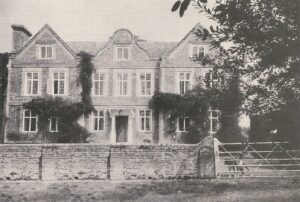
Littlefield Manor. A 2 bay, originally detached 16th C. Tudor Farmhouse building of the Hewitt family. This shows a sooted roof to both bays. This building is now behind the main Georgian building. The enlargement in fashionable Dutch & Flemish taste was carried out by the Baker family in the 17th C. The term Manor is a 20th C addition; it was never a mediaeval manor. The house was used for evacuees in the second world war.
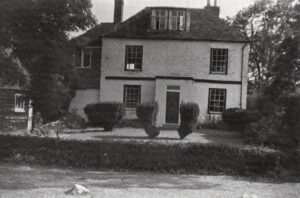
Nightingale Old Farm 1970s. A listed Georgian (1700’s) house stands in front of a c1600 one bay timber framed house built of reused timbers with an end smoke hood.
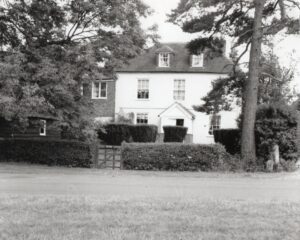
Nightingale Old Farm in 2007
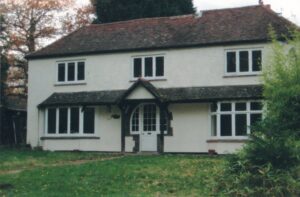
Orchard Farm, Broad Street Common 1970s. 17th C
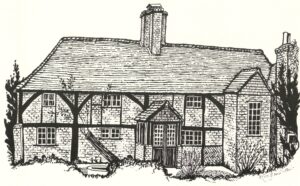
Passengers Farm possibly 15th C.. In legend the house was an Inn. The halled structure is mainly 17th C but contains features which suggest it could have been built earlier. Listed.
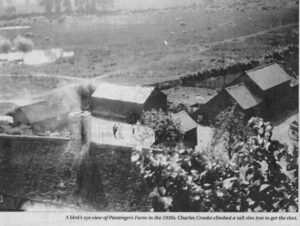
Passengers Farm c 1930
Aerial View showing the Granary on stilts (Saddle Stones to keep the vermin out).
Outside Privy ( 2 buckets & a wooden top), Cowshed & milking parlour, Cart Shed & Stable, Pig Sties & boiler to cooke the chat potatoes for the pigs.
Note that the common was devoid of the scrub & trees that it now has,
John Passenger d.1763
John lived at Bush Inhams Farm, Wood Street, now known as Passengers Farm but previously also known as ‘Flexwood’. His daughter Anne b 1732 married a John Chuter b 1722. John then lived at Passengers Farm. The farmhouse dates back to 14th C, although the halled structure is mainly 17th C. In 1548 it was called ‘Bussiclose’. The Passengers were long term tenants. John Chuter inherited the property from his father Nicholas Chuter and mortgaged it in 1714. The Passenger may well have been Huguenot extraction settling in the area in 1685 onwards. The French ‘Le Passager’ can mean a person passing through or a fugitive.
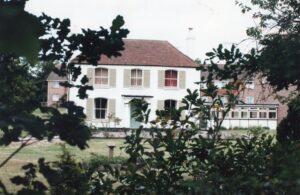
Pound Farm 1990s. Opposite the village pond. Listed building, mid/late 18th C. with 19th C. alterations. Converted into residences in 20th C. It takes its name from a pound where wandering livestock were impounded.
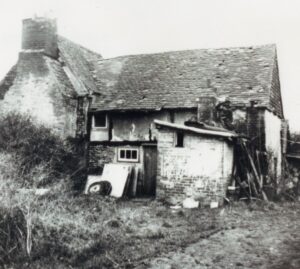
Range Farm. A late 17th C. farmhouse demolished in 1982 and rebuilt. Some of the timbers were used in the refurbishment of parts of the White Hart Public House. It was a 2 bay timber frame cottage with outside end chimney stack and lower back wing for service bay and stair.
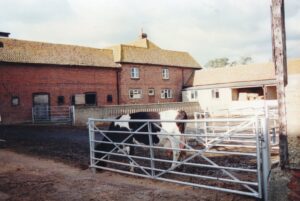
Russell Place Farm off Frog Grove Lane in 1990. This was a working farm with an operating milk yard until c1990 and a prize beef herd until c2018. Much of the farm land was then sold off as a SANG at that time. A Suitable Alternative Natural Green Space is designed for recreation aimed at protecting the nearby Specially Protected Ash Ranges Heathland.
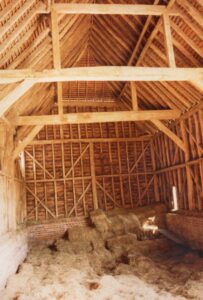
Russell Place Farm Barn in 1984. Constructed c1750.
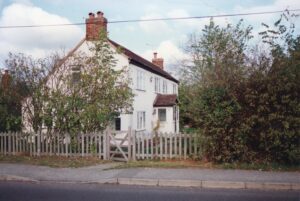
Stedman’s Farm on the village green in 1990. An 18th C. farmhouse.
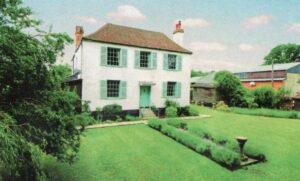
Wildfield Farm. A 17th C. listed farmhouse, adjacent to Pink’s Hill railway crossing.
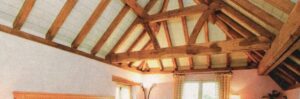
Wildfield Farm. 17th C. raking Queen Strut timber roof.