Since Woodstreet is only a part of a parish it does not have a separate identity until quite late in history. The first record we have found of Woodstreet as a name is in a list of lay subsidies (a kind of tax) for the Parish of Worplesdon in 1542/43. Only two out of the twenty-one persons listed actually have an address: the first is Johe (John) Russell, in the Woodstrete, and the second is Wiltmo (William) Russell, in the wood. The addresses of the four members of each of the Christmas and Ockley families are not mentioned, although we know that Thomas Ockley lived in Broadstreet (the area we know as Broad Street and Backside Commons). Thomas Daborn also lived in Broadstreet, as did Robert Loveland, the latter’s home being the house we now know as Hollybush Farm, Pinks Hill.
Benjamin Martin
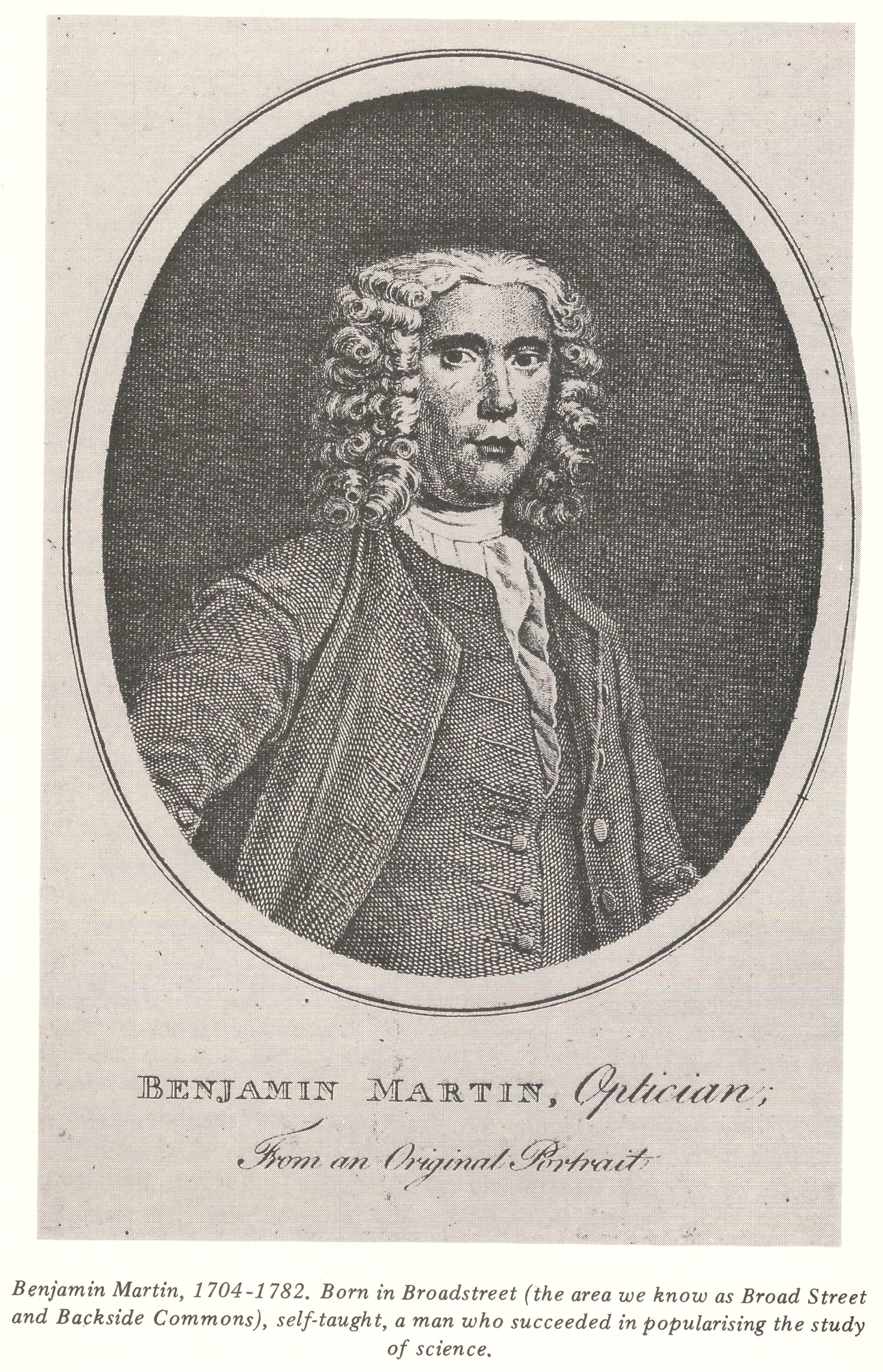
Benjamin Martin 1704 – 1782
Benjamin Martin, mathematician, instrument maker and general compiler, was born into a prominent Broadstreet family in 1704. (The area we now call Broad Street Common and Backside Common was then called Broadstreet.) His biography states that he began life as a plough-boy, but as his baptismal record states that he was the son of John Martin, gent., it would seem unlikely that he actually worked as a ploughman. As a younger son of a gentleman, (with three brothers and two sisters) he was most probably put in charge of one of his father’s farms. He was an ardent scholar—one biography quaintly phrases it “the more his scholarship flourished, the less he profited from the plough, and so he gave it up”. He inherited a legacy of five hundred pounds from a relative, but he may have had to wait until he was of age to receive it. In the meantime it is believed that he set himself up as a teacher of reading, writing and arithmetic at Guildford. He used his legacy to equip himself with books and philosophical (i.e. scientific) instruments. By 1729 he had kept a school in Chichester long enough to have met and married Mary Love at the very young age of twenty-four. In his spare time he studied mathematics and astronomy, and this hobby led him to invent and make optical instruments, the most successful of which was a pocket reflecting microscope with a micrometer, which he produced and sold for one guinea. He also gained a reputation as a maker of spectacles.
During this time he travelled the country giving lectures on natural philosophy (which we would call science). There is no doubt that his instruments proved to be a grand entertainment. His personality was such that he gained a wide circle of learned friends. His first publication was in 1737: a book entitled Bibliotheca Technologica, or Philological Library of Literary Arts and Sciences. This book could best be described as an encyclopaedia. Benjamin Martin is considered to have made “a very skilful and comprehensive compilation, epitomising the current information and ideas of the time under twenty-five headings”. He had persuaded so many of his friends to contribute that the list of contributors filled twenty-six columns!
He moved to London’s Fleet Street in 1740. Here he became famous as a scientific instrument maker. His shop sign—his trade mark—was Hadley’s Quadrant and Visual Glasses. He continued to write, producing a large number of popular scientific books. His An Essay on Electricity, published in 1746, contained an almost modern theory: “This subtle matter or spirit appears to be of an elastic nature, and acts by the reciprocation of its tremors or pulses, which are occasioned by the vibrating motion of the parts of an electric body excited by friction.” Many of his books, however, were almost literal copies of earlier works. This should not detract from the fact that he popularised scientific knowledge and thinking, often aiming his writing directly at the young. Worplesdon Parish actually owns the book, The Young Gentleman and Ladys Philosophy. His light ray diagrams, and his drawings of objects as seen under a microscope, could just as easily grace a modern textbook as those over two centuries earlier. His attitude to the education of women shows his independence of thought, even after attaining high society.
In his old age he handed over the administration of his finances to others, but these persons so badly managed his,business interests that he became bankrupt, and he attempted suicide in a moment of desperation. No doubt his death, on 9th February 1782, was hastened by the wound.
His son Lovell did not stay in the area: most of the Martin family appear to have moved to Ash or Aldershot. It is possible that Benjamin Martin, who was on the Vestry of 1855, was a relative. His line of the family had been in Compton for three generations before farming at Passengers Farm in the mid nineteenth century.

Example of Benjamin Martin’s published work – 1752
The Baker Family
This family appear to have been wealthy, the first record being in 1625, when John Baker left his 40-acre farm of ffrenches to his son Henry. It could be the same Henry who paid a substantial lay subsidy in 1640 and had five fireplaces taxed in 1664. The Mr. Baker of 1753 was clearly a man of substance and society, because his name appears on a map. This gentleman is probably the Henry Baker who had willed Russell Place to his aunt, dying sometime before 1769. Russell Place remained in the family, though, as Land Tax records of 1780 and 1790 show, the owners then being first James and then Henry. These eighteenth-century Bakers were closely related by marriage to the Martin family.
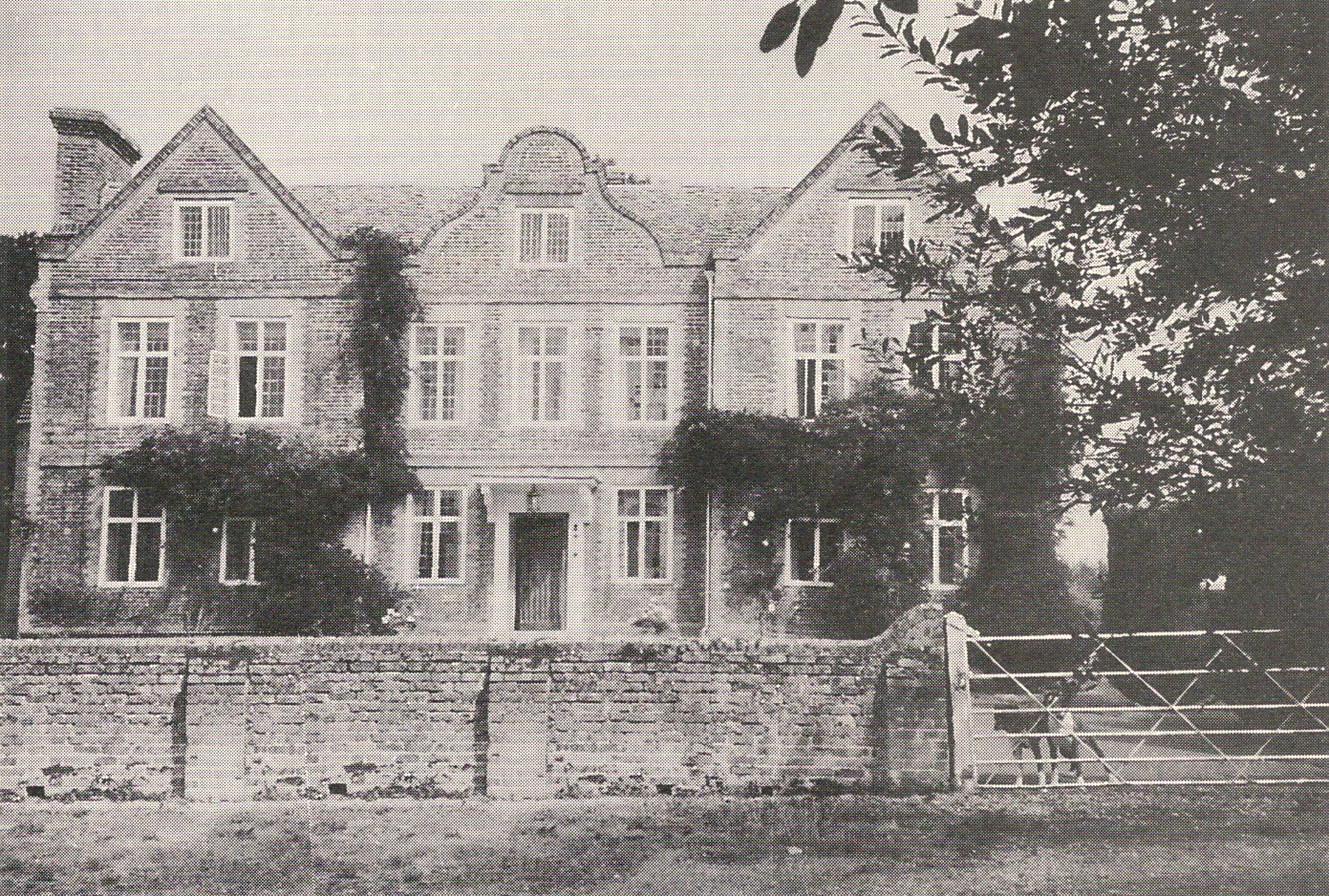
Littlefield. The Tudor farmhouse of the Hewitt family (now at the rear ) was probably enlarged, in Dutch and Flemish taste, by the seventeenth century Baker family. The term manor is a twentieth century addition: it was never a medieval manor. The house was used for evacuees during the last war.
The Clifton Family
This family moved about, both within the parish and at Pirbright, where one branch of the family owned land. The first reference is to an inheritance in 1582, when Robert Clifton received a house and land from Richard and Margaret. He does not appear in the Musters of the following year: these military preparations resulted in Thomas Clyfton being Pikeman selected; John Clyfton, Billman selected; Anthony Clyfton, Billman of the beste sorte; and John Clyfton also Billman of the beste sorte. In the same period of time only three Cliftons paid lay subsidies, i.e. taxes, so we must assume that Thomas and John Clifton still lived with their parents. By 1622 there were four Clifton families living in Worplesdon. Anthonie owned a field in Woodstreet called Inholme, which later became part of Nightingale Farm; William was the tenant of Frenches. Laurence Clifton was wealthy enough to be referred to as a gentleman—perhaps he owned the residence in our tithing which was taxed for ten fireplaces in 1664! The proud owner of this residence was by then Mr. Henry Clifton; his poorer Woodstreet relative Anthony was taxed on only four fireplaces. In 1661 Anthony had been one of thirteen people in the parish who had given a “free and voluntary present” of fifteen shillings to Charles II. The widowed jane Clifton had given the most, one pound.
The Cox Family
Thomas Cox was perhaps one of the first Worplesdon residents to see the advantages of concentrating his land ownership in one place. During the mid sixteenth century he had sold land at Stoke-next-Guildford in favour of Woodstreet. In 1583 he had been a Billman of the Second Sorte in the military musters. In 1590 he bought the freehold of Nightingales (Nightingale Old Farm), and the Cox family maintained their ownership of this farm for over a century.
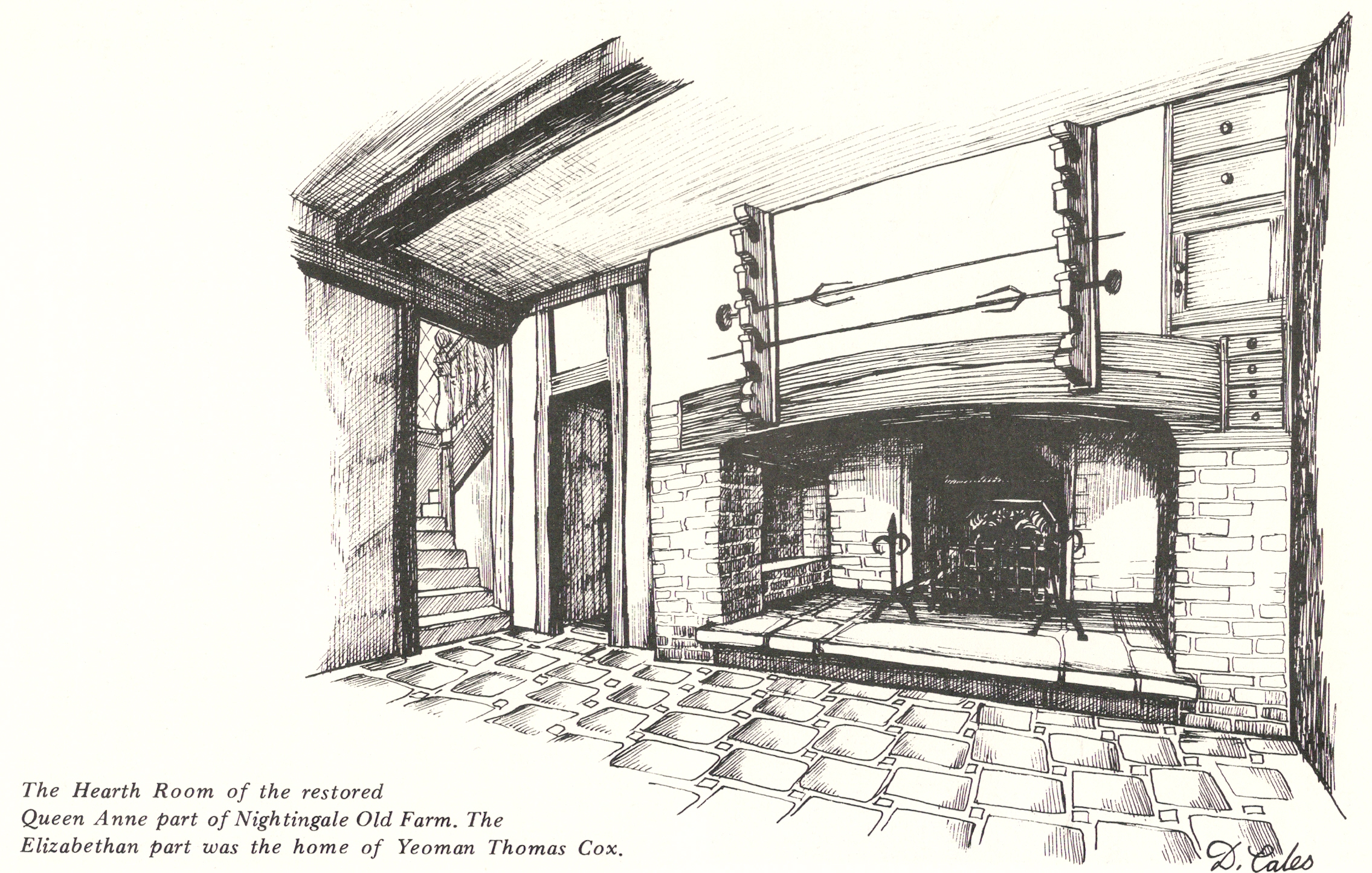
Hearth Room of Nightingale Old Farm – home of Yeoman Thomas Cox
The Crosse Family
The burial of Robert Crosse in 1596 occurred during a period when the Rector or recorder saw fit to add the place of residence, Woodstreet. He did not appear in the musters when Laurence Crosse was a Billman of the beste sorte. Another Crosse, William, owned enough land to pay large subsidies and serve on jury panels of the seventeenth century.
The Daborn Family
Early scribes spelt as they wished, so often the same name appears in the same document with different spellings. Thus in 1583 the recruiting officer listed both Thomas Dawborne and Thomas Daborn as billmen selected. One of these men had sold land which he owned with Thomas Christmas to William Ockley. In 1562 one of the Daborne families lived in an area near the end of Frog Grove Lane. Thomas Dawborne held a house called Hooks (perhaps Broad Street Common) from 1566 until at least 1605. Perhaps it was his son John, whose address was given as Broadstrect, who lived there in 1608. A John Daborne also farmed at Frenches in 1609. Baptismal records of Dabornes in Worplesdon continue throughout the seventeenth century, but we do not know where they lived.
The Giles Family
The baptism of William Giles’ daughter is one of the first to appear in the parish registers. He was also a Billman of the seconde sorte and appears in the tables of lay subsidies. Thomas Gyles senior and junior also lived in Worplesdon, Thomas senior being an Archer of the second sorte. There seems to have been two William Gyles in 1588, one living in Broadstreet and one in Woodstreat: they died within months of one another.
The Hewate Family
This family lived at Littlefield for at least a century before 1664. Walter Hewatt was a Billman of the best sort in the Armada Musters. The latter part of the seventeenth century saw John senior and junior and Richard Hewwitt living in the area.
The Lee Family
This is one of the families where the name John was always carried by the eldest son. In 1583 John Lee was a billman of the seconde sorte, whilst his relative William was an archer. By the time of Mr. Weston’s (Captain) Band Revue of 1592 John Lee was a Qualliver. The parish records of the early seventeenth century show John and Young John of Broadstreet and Harry of the Wood baptising their children.
The Loveland Family
This is one of the oldest families of Wood Street: they lived and farmed Hollybush Farm for at least three hundred years. The first known Loveland is also one of our earliest recorded residents. The household inventory of George Burt alias Loveland appears in the farming section. Most of the Lovelands were firstly carpenters, only taking to farming in their old age. They owned or rented several Woodstreet farms, including Nightingales, during the eighteenth century. The last Loveland was James, who pastured his sheep on Pinks Hill at least until 1881.
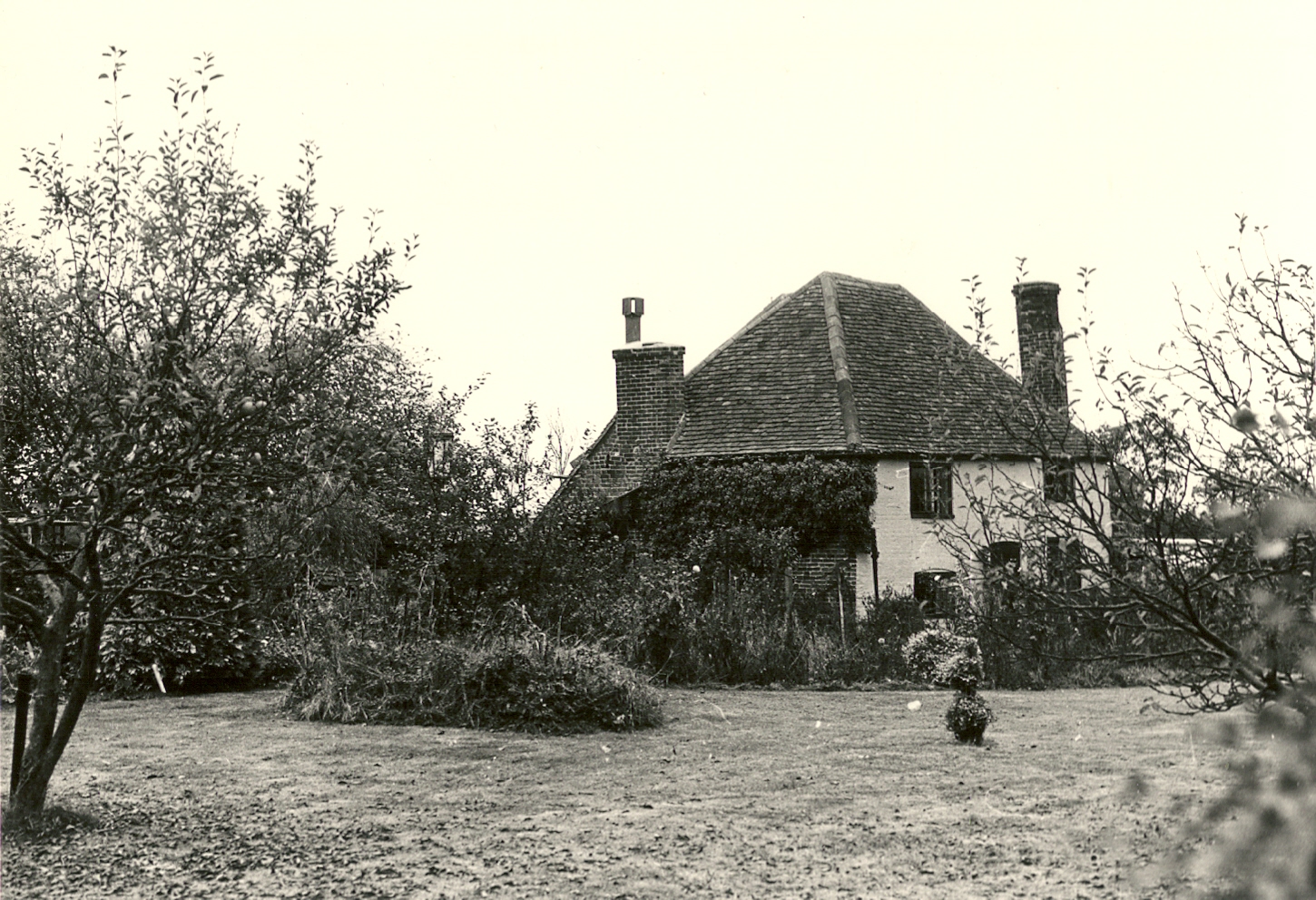
Hollybush Farmhouse. The Loveland family extended their fifteenth century homestead in the Georgian style. Thirteenth century pottery has recently been found in the garden.
The Ockley Family
Five members of this large family were selected as Pikeman and Billmen in the 1583 Musters. They did not all live in Woodstreet and it is difficult to determine who did. Thomas lived in Broadstreet in 1590 and Robert lived there for a large part of the late seventeenth century. The more prominent Ockleys lived at Rickford.
The Purse Family
Thomas and Robert Purse lived in Woodstreet around the beginning of the seventeenth century.
The Russell Family
We can consider this family to be the founding dynasty of Woodstreet —this history is peppered with references to the Russell family, and the earliest recorded Woodstreet resident is John Russell. In the 1605 survey of the Manor of Worplesdon there are large areas of land owned by the Russells throughout the parish. They later concentrated on Russell in the Wood (Old Gables), Russell Place and also Hurst Farm at Stringers Common. The Russells contributed largely to Woodstreet’s population increase of the late fifteenth and early sixteenth centuries. By 1705 John Russell had moved to Guildford, merely exercising his vote where he still owned land. It is likely that the Guildford-born artist, John Russell, is descended from this man. (Old Gables seems to nurture artists!) Dorothy Russell was the last Russell resident of Old Gables, in 1780.
The Slaughter Family
William and Jane Slaughter ( nee Etherington ) had a son, Thomas Slaughter. He married Eliza Hartfree in 1846. Thomas was a tenant farmer of both Frogrove and Russell Place

Thomas Slaughter, 1823-1901. Son of William and Jane Slaughter, nee Etherington, born in Wood Street. He was employed by Frog Grove House as a servant in 1841. He married Eliza Hartfree, a village lass, in 1846. After tenanting various farms in Compton and Pirbright, he finally settled at Frog Grove House as the tenant farmer of both Frog Grove and Russell Place.

The Slaughter Family c1871
The Smith Family
There are very few Smiths recorded in Worplesdon Church records. This is probably because they were Quakers (Society of Friends). Stephen Smith, a friend of the founder George Fox, actually owned land at Broad- street in our tithing. Thomas Smith lived in the Woode (perhaps Bazil Wood, Pinks Hill) in 1610. In 1664 Henry Smith was taxed on nine fire- places and John Smith on six, both somewhere in the Woodstreet area.
The Smither Family
Thomas Smither was a Billman of the seconde sort in 1583. Like the Smith family, the Smithers appear to have lived in Broadstreet for three hundred years without the benefit of Parish Baptism or Burial!