Arthur Drummond (1871–1951) was a painter of historical and other figure subjects. He was the son of John Drummond, a marine painter, and was born in Bristol. He was an artist of talent and repute, exhibiting at the Royal Academy from the age of nineteen years. At this time he was living at ‘Artolar’, Wood Street Green, but when he exhibited again at the Royal Academy, in 1899, he lived at Old Gables, Pinks Hill.
His recreation was model engineering, which he fully developed whilst living in Wood Street. As he found it difficult to obtain a small lathe suitable for model-making at a reasonable price, he designed and built his own in 1896. He went on to design and make two more lathes, which had beds of a special form whereby the use of a gap piece was eliminated but the advantages of a gap-bed lathe were retained.
Arthur and his brother Frank, who had been apprenticed as an engineer, made these lathes in their workshop adjacent to Old Gables. It is considered that Arthur had a remarkably inventive mind and a natural flair for designing machinery. Accidents did happen—one elderly Wood Street man recalled that on one occasion “he and his brother put themselves into hospital”!
Within a few years the brothers had developed a very popular range of small lathes from the original three designs. In 1902 a limited liability company was formed and land acquired on the site of former brickfields at Broadstreet. At this time a 3½-in. screwcutting lathe was introduced, which sold well to both model engineers and small engineering works. One of these lathes was included in the equipment of Captain Scott’s expedition to the South Pole in 1912.
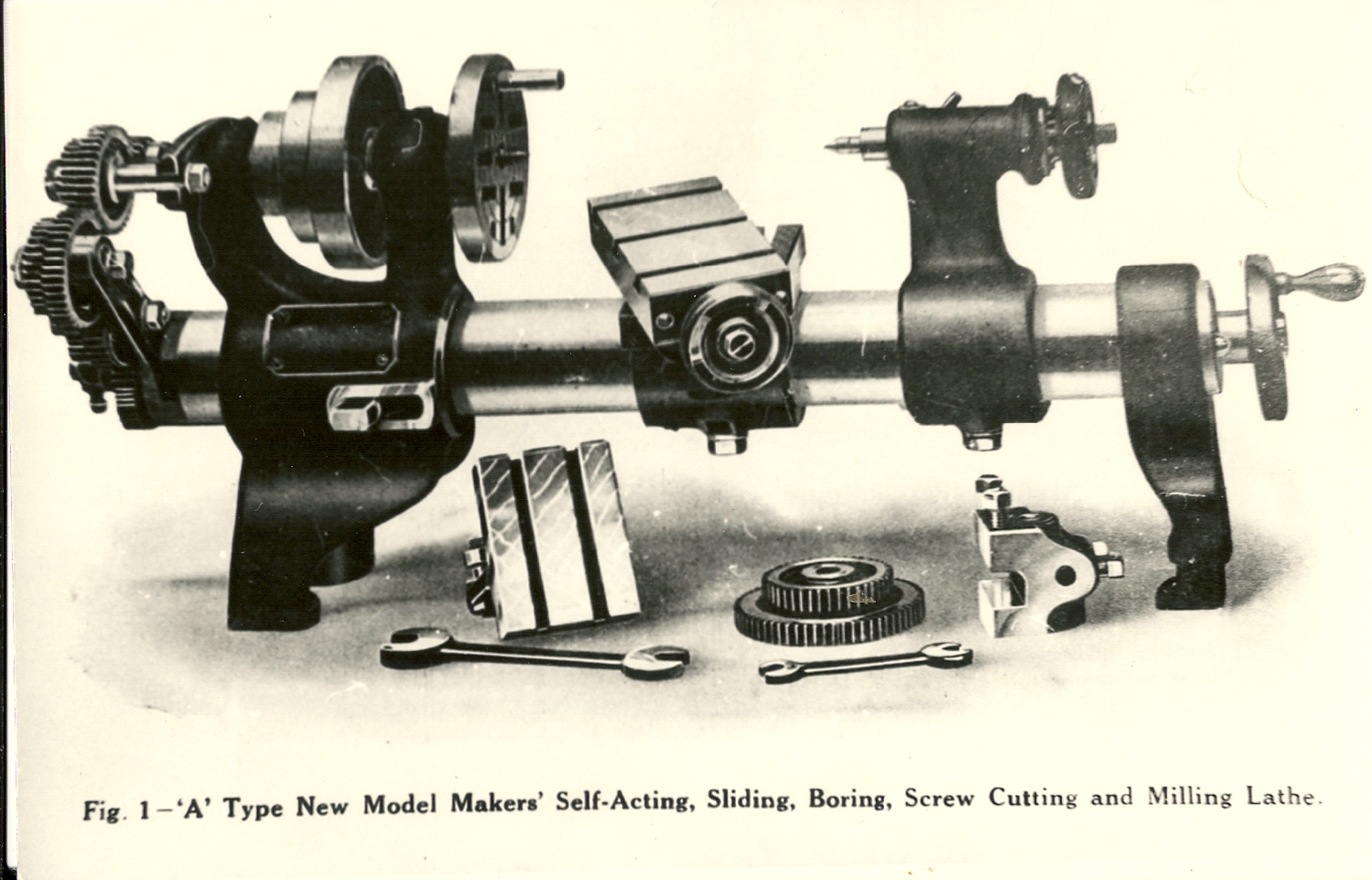
A Drummond Lathe. A hobby, started in a workshop in the garden of Old Gables, grew into an industry whose products were exported to every continent in the world.
The first of a range which became known as ‘round bed’ machines was developed in 1906. These lathes sold for only five pounds and were exported in large quantities to Australia, Canada and India. A foundry was added and larger lathes—5-in., 6-in. and 7-in. screwcutting lathes— were built and sold on a considerable scale, principally to garages.
The outbreak of war in 1914 brought large Government orders for 3½-in. and 5-in. lathes, the 3½-in. for use in destroyers and submarines. The larger lathes were for the Mechanised Section of the Army Service Corps. The factory operated day and night until May 1915, when a fire destroyed the majority of the buildings and plant. The rebuilding and re-equipment of the works were undertaken with great urgency.
The growth of the motor vehicle industry led to a demand for machines for high-production turning operations. Production began in 1925 of a new generation of larger lathes, which sold in large quantities to the motor vehicle and aircraft industries. Modifications and additions to the range resulted in the extension of the factory on numerous occasions. During the Second World War all Bristol engine crankshafts and propeller shafts were made on Drummond lathes; modifications had been made in 1938 to the Drummond No.1 Maxicut Lathe to make it suitable for turning shells. Production of small-centre lathes was discontinued during the war to allow the company to concentrate on the building of multi-tool lathes and gear shapers.
After the war a completely new range of Maxicut machines was developed. Arthur Drummond continued as Managing Director and was largely responsible for the design of machines until 1942. He continued as a director of the company until 1946 and died, aged eighty-six, in 1951.
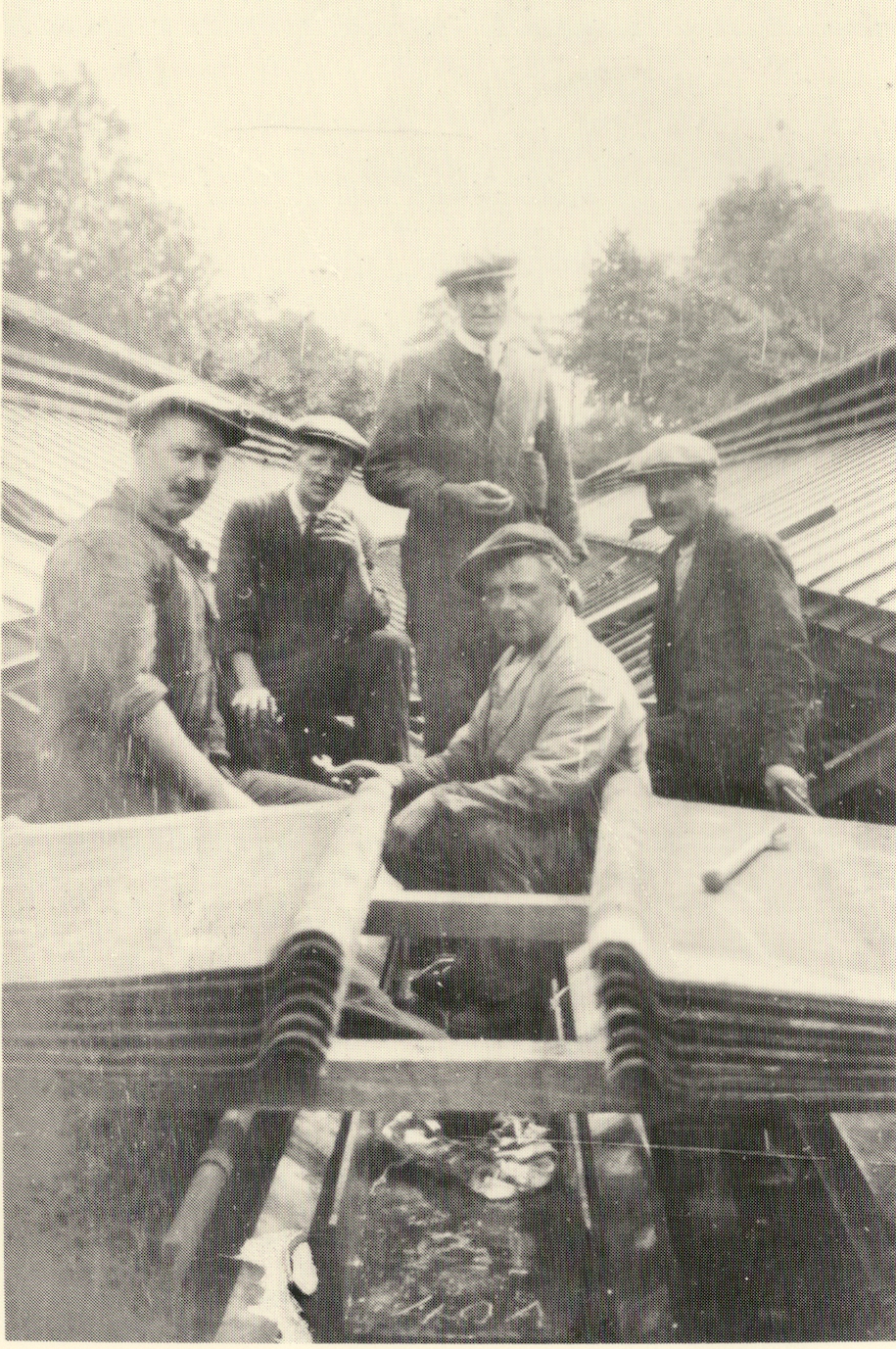
The glass lights on the roof of Drummond’s factory being replaced for safety in 1939.
By the 1960s there were about three hundred employees, including apprentices, drawing office and welfare staff. Drummond (Sales) had been a separate company since 1933. The foundry had been closed, but the buildings contained a production area of about forty thousand square feet, a pattern shop, drawing office, paint shop, fettling shop, heat treatment department and an induction-hardening installation for beds, as well as a canteen and social club. The pride of the factory was the Standards Room, which was designed and fitted with the latest scientific testing equipment to ensure accurate measurement and testing.
The severe national and international economic situation of the 1970s resulted in the phased closing of the factory, which by now was under the management of Staveley Tools. Such was the standard of workmanship and training that few local people were unemployed for long after the final closure in 1981.
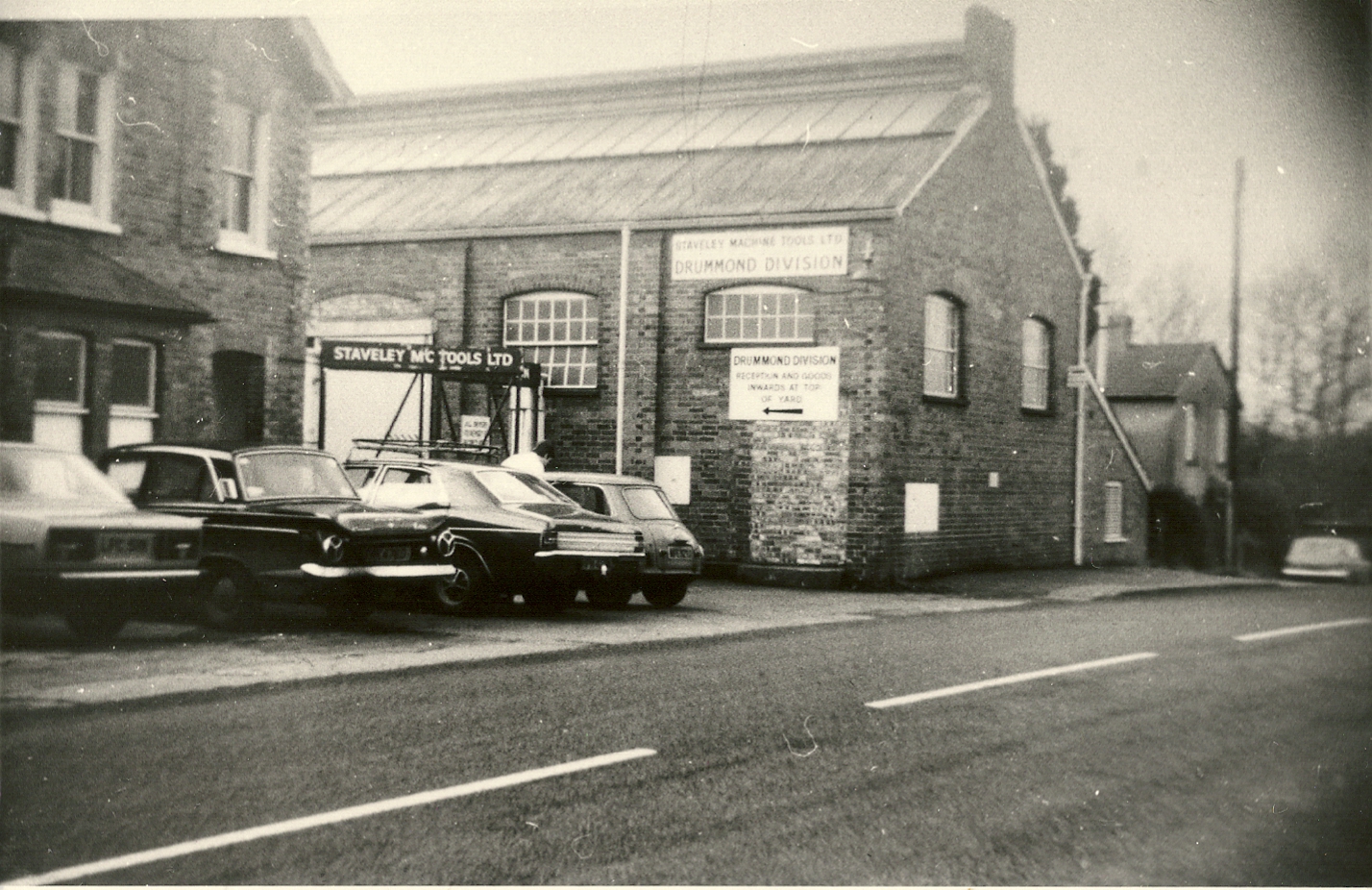
One of the last views of our local factory – Drummond Factory under the management of Staveley Tools
The site was redeveloped for small factory and warehouse units, mainly devoted to the high-tech. industry. Houses now stand on the area where the canteen and social club once stood.